
INDL-9 conference
AI Supply Chains: Building an interdisciplinary research agenda for AI and labour
ILO, Geneva, 09-11 September 2026



INDL-9 Registration
Keynote Speakers
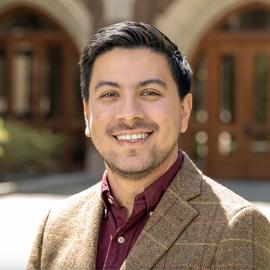
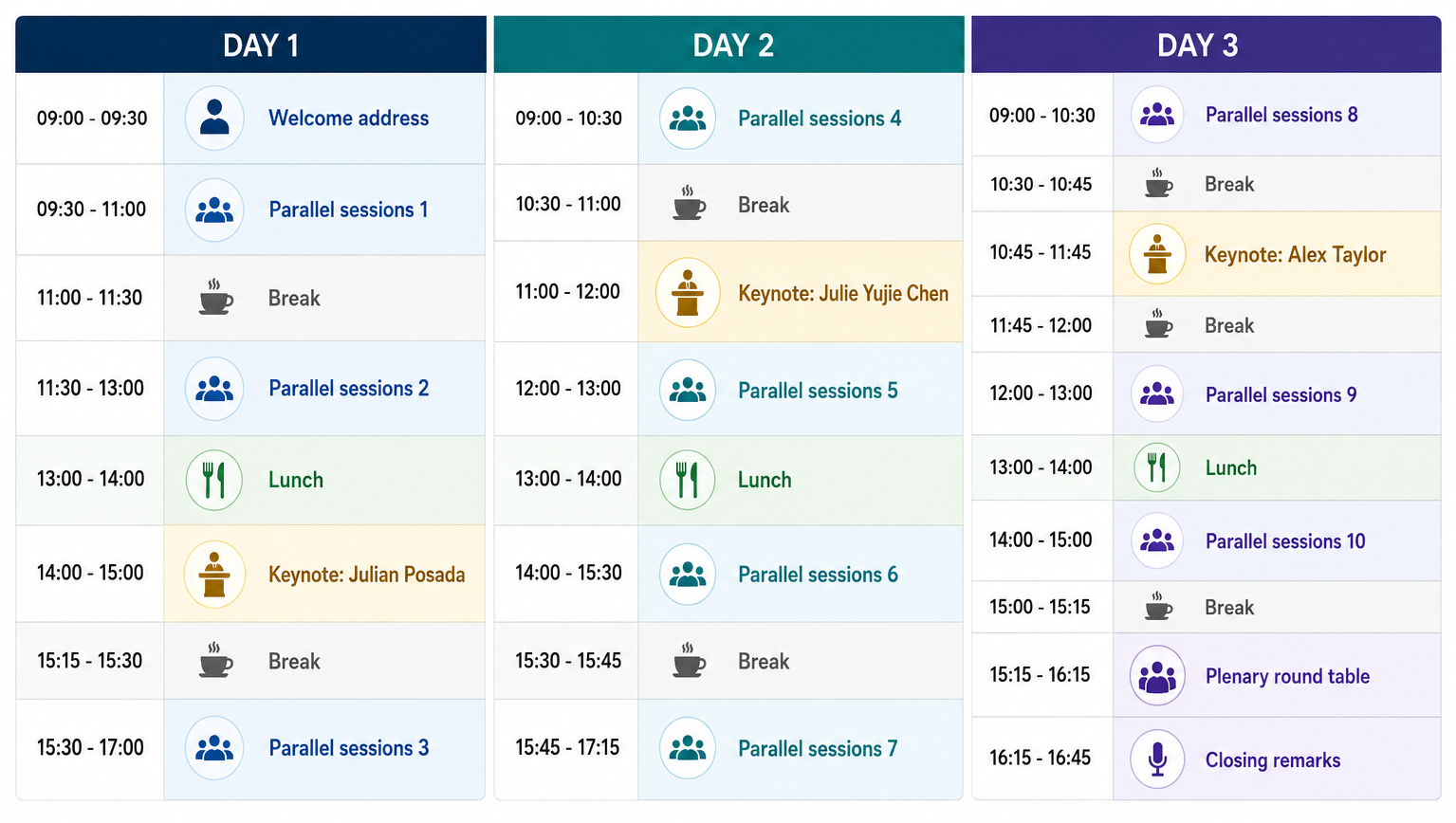
Keynote 1: Julian Posada
Data Work and Territory: The Latin American Experience
Prof Julian Posada, Yale University
Concealed behind digital platforms, a vast, dispersed, and largely invisible workforce quietly generates and annotates the data that powers today’s AI boom. In Platform Extractivism, information scientist Julián Posada argues that these platforms are engines of extraction rooted in the enduring social inequalities and transnational power disparities of coloniality. Posada reveals that technology, especially today’s so-called AI, is not merely artificial, autonomous, or intelligent; it inherently relies on and extracts from humanity. Drawing on mixed-methods research on three platforms in the Venezuelan data work sector, Posada exposes the human cost of this technology, revealing how digital platforms have capitalized on economic instability, targeting vulnerable populations to extract value from their precarious labour.
A critical intervention in the debate on the future of work, this book provides profound insight into the implications of artificial intelligence, moving beyond the context of advanced economies to focus on the labour involved in its production. Posada questions whether AI is a tool for freedom, or an engine for widening the gap between the unseen workers who teach machines, and the corporations that profit from them.
Julian Posada is Assistant Professor of American Studies at Yale University and Just Tech Fellow at the Social Science Research Council. His research centres on the social and cultural dimensions of information, with a particular emphasis on the relationship between labour and the development of artificial intelligence.
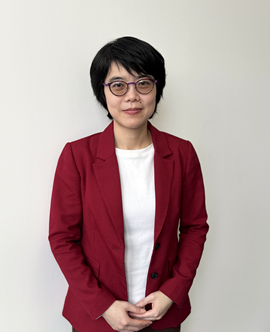
Keynote 2: Julie Yujie Chen
From Rengong (artificial/human labor) to Intelligence: Rethinking AI and Labour in and from China
Prof Julie Yujie Chen, University of Toronto
Keynote 3: Alex Taylor
The particulars of data work in AI’s Supply Chain
Prof Alex Taylor, University of Edinburgh

DiPLab Scholarships
Small scholarships recipients
DiPLab, one of the co-organizers of INDL-9, has allocated 10 small scholarships (EUR 400 each) to partly support travel, accommodation, and meal expenses of promising INDL-9 presenters.
Scholarship will be given to recipients during the welcome address of the conference. Obtention is conditional on actual participation.
The competition was harsh, with a very large number of high-quality applications, and the selection committee (Matheus Viana Braz, Stella Lopez, Marco Marrone, Myriam Raymond, and Iraklis Vogiatsis) had to make difficult decisions.
After a careful selection process, the following ten applicants have been awarded a scholarship:
- Kinchan Chakma
- Prachi Sharma
- Fitahiana Razafimahenina
- Sonam Rai
- Shikha Shalini
- Amanda Biazzi
- Prachi Tayade
- Saadeddine Igamane
- José Ángel Cerón Hernández
- Fasica Gebrekidan
Congratulations to our DiPLab scholarship recipients. Looking forward to meeting you in Geneva
Program at a glance
INDL-9 Call for Papers
AI Supply Chains: Building an interdisciplinary research agenda for AI and labour
ILO, Geneva, 9-11 September 2026
The International Network on Digital Labour (INDL) is pleased to announce its ninth annual conference, which will be held at the International Labour Organisation, Geneva, Switzerland, on 9-11 September 2026. INDL conferences provide a unique opportunity to share knowledge and new perspectives in research and practice related to digital labour and its linkages with technology, platformization, and the rise of artificial intelligence (AI). Each year, the organizers of the conference propose an overarching theme on which to particularly encourage submissions, as a way to reflect the rich diversity of views on this multifaceted subject, to consolidate existing knowledge, and to highlight new ways forward.
The topic of this year, “AI Supply Chains”, builds on the idea that, as the global economy becomes increasingly dependent on Large Language Models (LLMs), autonomous vehicles, and robotic logistics, we must ground our understanding of these systems in rigorous scientific principles. This conference begins by taking stock of the work undertaken by computer scientists and engineers who have applied scientific laws—from the kinematics of autonomous transport to the transformer architectures of LLMs—to create a new digital infrastructure. From an organizational perspective, we examine how these technologies are reshaping value chains, driving new models of operational efficiency, and creating both opportunities and risks for enterprise sustainability. There is a need to evaluate the current state of these “autonomous” chains, moving beyond the hype to assess the technical stability, commercial viability and scalability of the algorithms that now manage the global flow of information and goods.
A critical, yet often overlooked, segment of the AI supply chains is the vast human labour force required to make these systems functional and “safe”. Behind every refined LLM and autonomous sensor is a global network of data annotators, labelers and content moderators performing varied tasks such as labeling data, annotating and curating data, calibrating intent and filtering toxic material. We seek to bring this “invisible” layer of the supply chain into the light, examining the economic costs of this model which is dependent on invisible labour and the societal implications of outsourcing high-stakes ethical decision-making. More importantly, we aim to identify and promote best practices in responsible sourcing and data supply chain management. This includes exploring how leading organizations are moving toward “impact sourcing” and rigorous vendor audits to ensure that the quest for high-quality data does not come at the cost of human dignity. An interdisciplinary approach highlights how the “efficiency” of an AI supply chain is often subsidized by a precarious and overlooked global workforce, and how businesses can pivot toward more ethical and sustainable procurement strategies. We seek to analyze the “return on investment” (ROI) of ethical AI, exploring how investments in fair labour practices and transparent sourcing contribute to long-term business resilience, superior data quality, and the mitigation of regulatory and reputational risks.
The objective of this conference is to bridge the gap between technical efficiency and human well-being to build a comprehensive research agenda. A central pillar of this agenda is the promotion of social dialogue to co-determine the future of AI at work. How can we design the next generation of AI supply chains to be not only scientifically optimized and economically viable, but also grounded in international labour standards and collective bargaining? We seek to explore how social dialogue can act as a catalyst for innovation while ensuring that the benefits of AI are equitably distributed across the supply chain.
We invite contributors to move from fragmented observations to a unified research agenda for the next decade. The goal is to produce a roadmap that integrates the rigor of computer science with the insights of sociology, economics, psychology, industrial relations and other disciplines. We seek papers that propose new frameworks for a “human-centric” AI supply chain—one that acknowledges the scientific laws of the machine while protecting the sociological and psychological fabric of the humans who build, train, and coexist with them.
Along these lines, this year’s INDL-9 conference highlights the following Thematic areas:
- Transparency and traceability in the AI models and their supply chains
- Working conditions, occupational safety and health of workers in the human-in-the-loop
- Best practices for ethical AI procurement and corporate social responsibility in data labeling
- Role of social dialogue in governing AI-mediated work
- Organizational, legal and financial perspectives on the rate of investment of ethical AI and challenges of regulatory compliance (eg., the EU AI Act)
- New frameworks for a “human-centric” AI supply chain
- Ecological impacts and environment sustainability of AI infrastructures
Four more “Legacy topics” are also included, focusing on subjects that previously garnered substantial interest from conference presenters:
- Algorithmic management, labour control, and workers’ resistance
- Platform cooperativism and alternative business models
- Legal frameworks, regulatory initiatives, and institutional responses to platform labour
- Gender and digital labour
We invite submissions from confirmed and more junior academic researchers (also including PhD students), policymakers and professionals involved in the study of these themes, also including labour organizers and other practitioners. All disciplines involved in the study of labour and/or technology are welcome, for example economics, management, political science, law, sociology, psychology, history, geography, science & technology studies (STS), media studies, design, and computer science.
This edition of the INDL-9 conference is organized through a collaborative partnership between the ILO (International Labour Organization), DiPLab (Digital Platform Labor), ACM SIGCAS (the Association for Computing Machinery Special Interest Group on Computers and Society), and Yale University.
Submit your abstract on or before the 30 April 2026 7th of May (deadline extended).
INDL-9 Scientific Committee
Mathilde Abel, Institut Polytechnique de Paris (FR)
Amir Anwar, University of Edinburgh (UK)
Antonio Casilli, Institut Polytechnique de Paris (FR)
Mariana Fernández Massi, CONICET (AR)
Rafael Grohmann, University of Toronto (CA)
Francisca Gutiérrez, Universidad Austral de Chile (CL)
Julieta Longo, CONICET (AR)
Marco Marrone, Università del Salento (IT)
Maria Mexi, Geneva Graduate Institute (CH)
Milagros Miceli, Weizenbaum Institut (DE)
Gemma Newlands, University of Zurich (CH)
Manolis Patiniotis, National and Kapodistrian University of Athens (GR)
Caetano Patta Barros, International Labour Organization (BR)
Julián Posada, Yale University (US)
Uma Rani, International Labour Organization (CH)
Myriam Raymond, Université d’Angers (FR)
Diego Rivera, Universidad de Chile (CL)
Núria Sánchez Mira, Université de Neuchâtel (CH)
Lucas Santos Souza, Universidade Federal Fluminense (BR)
Kanikka Sersia, Geneva Graduate Institute (CH)
Antonio Stecher, Universidad Diego Portales (CL)
Paola Tubaro, CNRS (FR)
Alan Valenzuela, Universidad Alberto Hurtado (CL)
Matheus Viana Braz, Universidade Estadual de Maringá (BR)
Iraklis Vogiatzis, National and Kapodistrian University of Athens (GR)
Morgan Williams, International Labour Organization (CH)